
Quality Assurance for Adhesive-Based Assembly with Artificial Intelligence

Karsten Esser
Project Engineer, Miele & Cie. KG

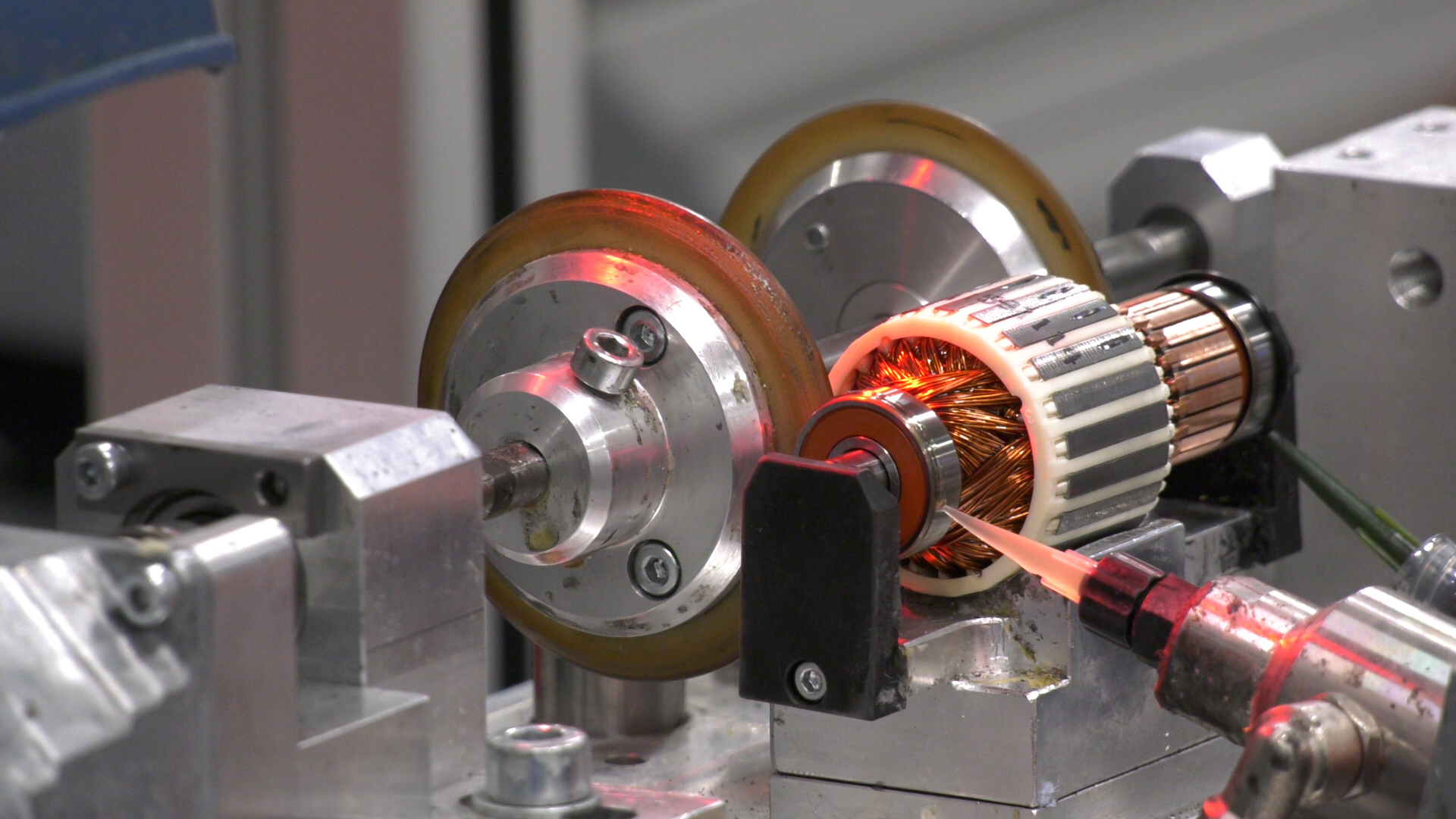
Miele & Cie. KG produces household appliances including vacuum cleaners and washing machines, with many components assembled in series production. During motor assembly, a rotor is bonded to a bearing shield — and the integrity of that adhesive bead directly affects final product quality.
aiXbrain was engaged to analyze adhesive beads via camera-based AI, assessing workpiece stability and flagging issues with suggested corrective actions.
Under the BMBF-funded GeMeKI project, the adhesive dispensing station was equipped with a line scan camera. Camera data and dispenser signals are routed through a locally installed Raspberry Pi acting as an AI gateway.
Training data was assembled through manual labeling on the production floor and a training cell that simulates representative defect patterns. A pre-trained image classification model was then fine-tuned on this data.
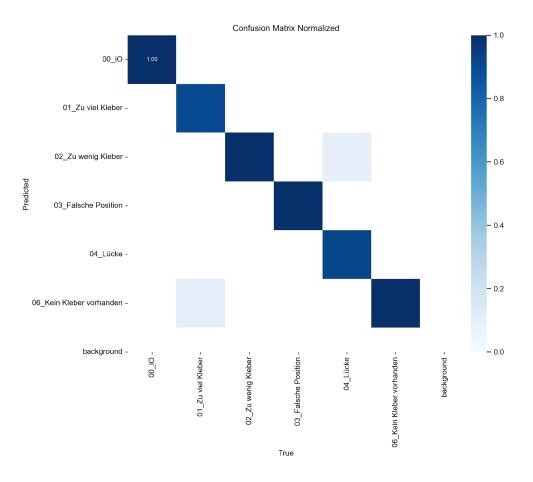
The resulting AI distinguishes good from defective adhesive beads with near 100% accuracy, and each identified defect type is mapped to a specific corrective action.
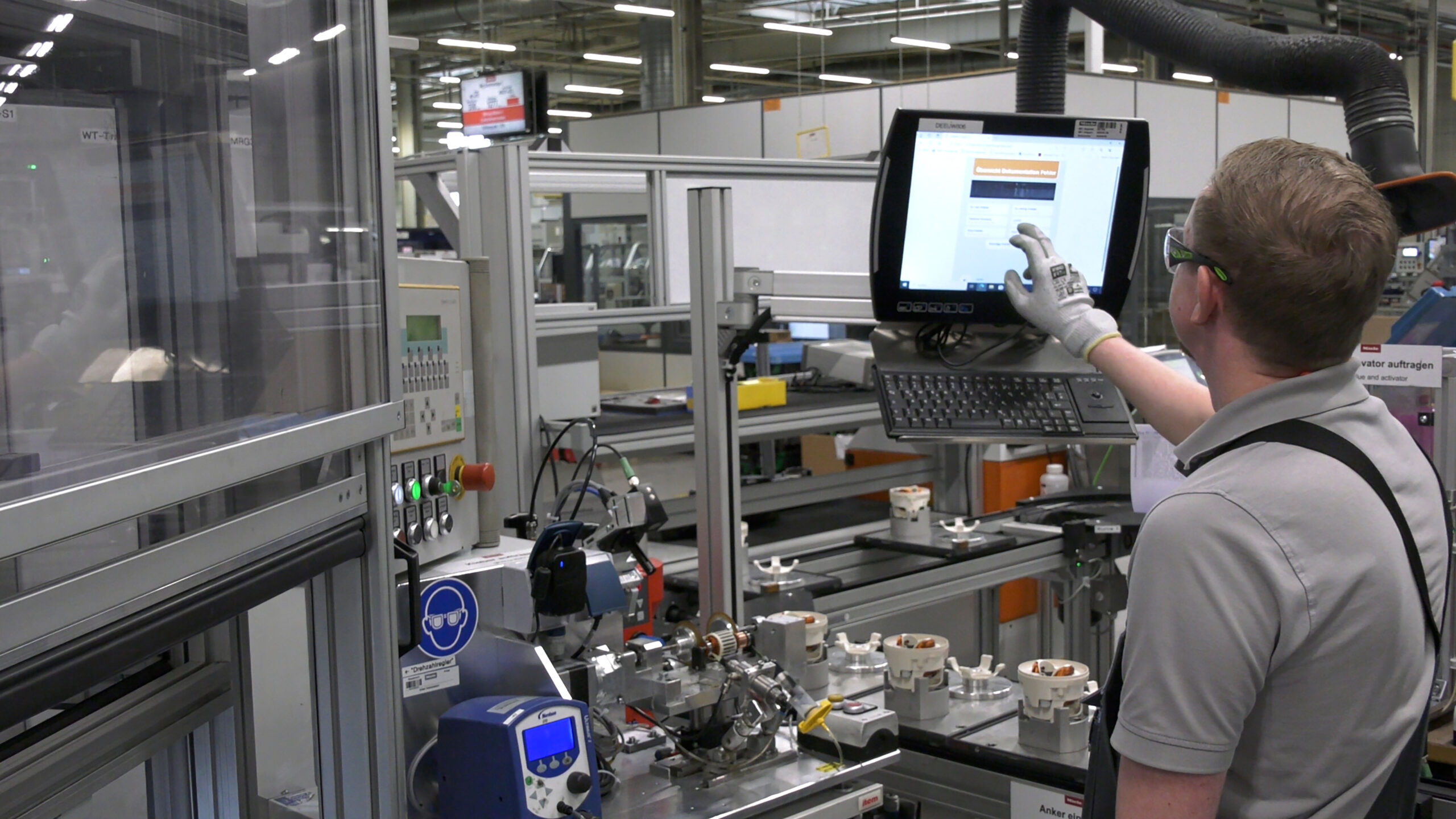
The deployed AI system helps assembly line workers inspect workpiece and process quality more quickly and reliably. Onboarding of new staff is faster, while scrap rates and rework volume are substantially lower.
The approach — pairing cost-effective hardware with fine-tuned pretrained models — provides an economically attractive alternative to traditional machine vision systems. aiXbrain delivers the underlying AI component as a managed service via its Dataray® AI Framework.