One particle too many: How the SiPaFeB project is tackling the invisible weak point in battery cell production – and what aiXbrain is contributing to the process.


Microscopic particles—metal fragments, dust residue, fibers—can trigger a short circuit inside a battery cell. This might sound like a minor issue, but it is not: particle contamination is one of the main causes of a scrap rate of around eight percent in battery cell production. In other industries, this figure is below half a percent.
Where a particle comes from, when it entered the process, which step released it—this is currently almost impossible to track reliably. At least not in real-time, and certainly not in an automated way.
That is exactly what SiPaFeB is building.
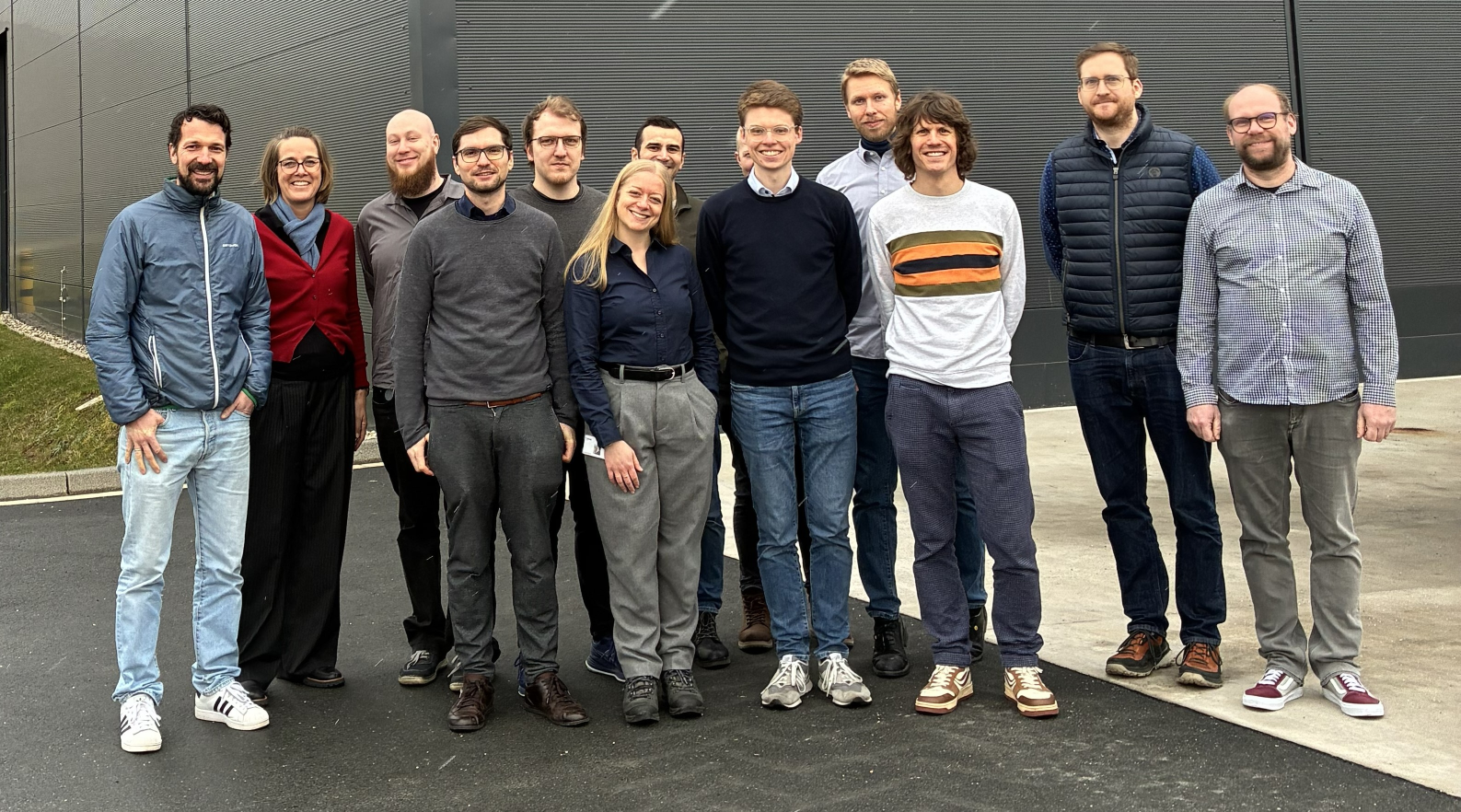
Since January 2026, we have been working with Fraunhofer FFB, EAS Batteries, CleanControlling, MeaStream, eurogard, and the KIT IAM-ESS on a measurement and analysis system for ongoing battery cell manufacturing—one that detects, evaluates, and traces particle emissions back to their source. Fraunhofer FFB provides the research production line in Münster, while EAS Batteries contributes the industrial production line for the demonstrator setup. CleanControlling supplies expertise in cleanliness analysis, and MeaStream provides inline measurement technology directly at the process. eurogard is coordinating the project and developing the central data platform; the KIT IAM-ESS is contributing findings from the preliminary QuaLiZell project. EVIDENT Europe and BMW are supporting the project as associated partners.
aiXbrain provides the AI.
What this means technically
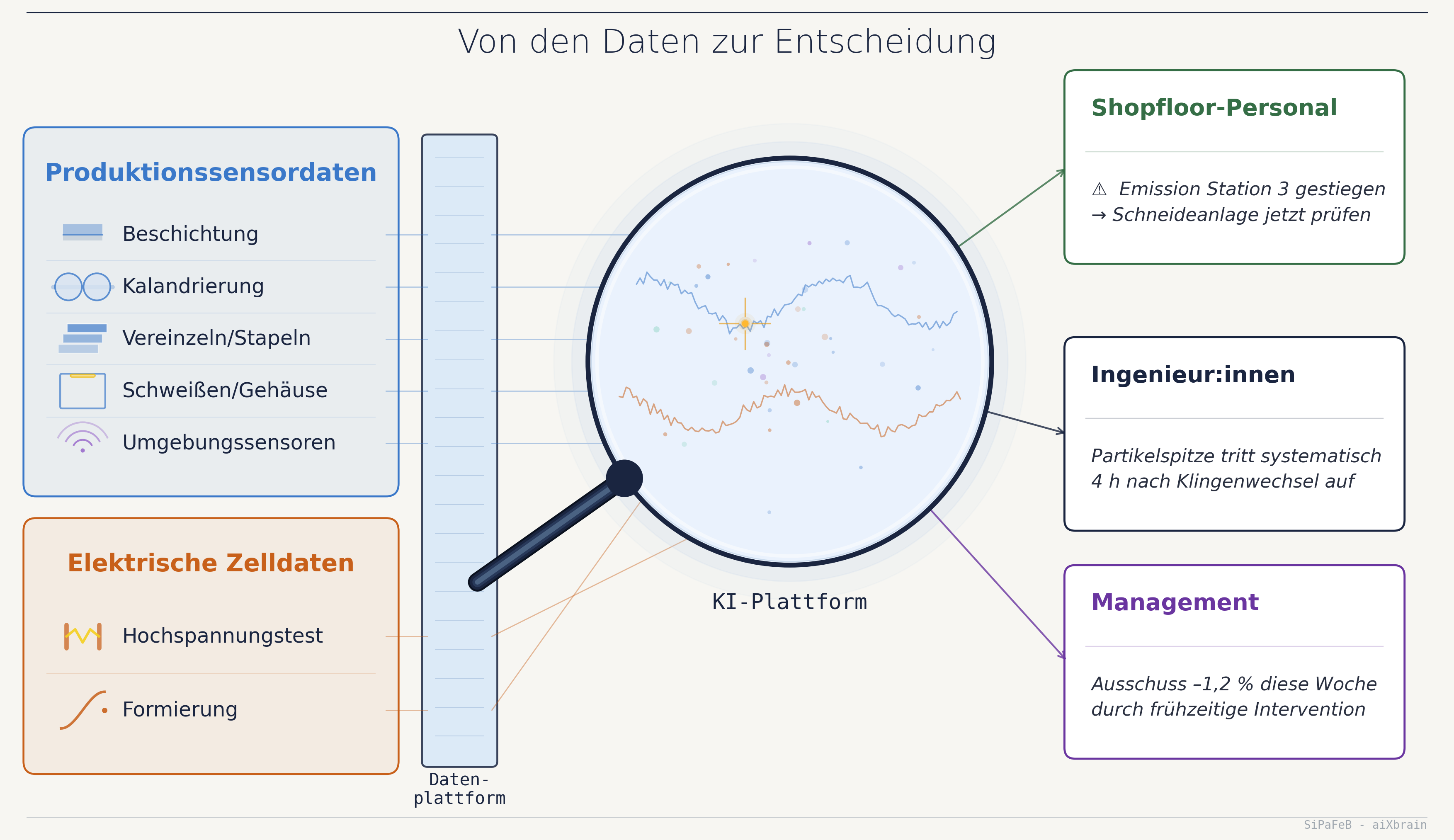
Battery cell manufacturing is a chain of process steps—from electrode coating, singulation, and stacking to electrolyte filling and formation. Particles can be introduced at any of these steps. The real problem: most of them are difficult to detect directly during ongoing production, especially if they are visually indistinguishable from the electrode material—even image processing systems reach their limits here. Whether a cell has been contaminated often only becomes apparent during the electrical tests of the assembled cell: in the high-voltage test or during formation.
Linking these late-stage signals to the correct process steps is the real challenge—and the point where AI comes into play. To achieve this, sensor time series from the entire process chain must be merged with unstructured operational data from shift logs, cleanliness reports, and maintenance histories. Flexible architectures are crucial here to gradually uncover the truly relevant information within the data.
The system is designed to detect critical emissions as soon as they occur. To predict them before they happen. And to explain where they originate. Anyone who knows this can intervene in a targeted manner—directly in the ongoing process, without waiting for the next audit.
The results are delivered via our agentic AI, tailored to specific roles: shop floor personnel, process engineers, and management all need different answers from the same data, each prepared and accessible in a way that suits their needs.
Why this goes beyond the project
Battery cell production in Europe is in a phase where investment promises are meeting production reality. Significantly reducing the scrap rate creates competitiveness in an industry where margins and safety depend on the same process control. Those who build the infrastructure for end-to-end particle monitoring at the same time lay the foundation for the Digital Product Passport—an EU requirement for which many battery manufacturers do not yet have an answer.
Particle purity is a matter of safety and resource efficiency. We are working on it.
SiPaFeB runs from January 2026 to December 2028 and is funded as part of national battery research.