KI Use Cases in der Produktion: Taktzeitoptimierung


How can AI help prevent critical cycle time fluctuations in linked production lines? We explore this question in Part 1 of our mini-series on AI use cases in manufacturing. Each of the AI use cases presented builds on the 4 Opportunities for Value Creation with AI in Industry.
In linked production facilities, such as conveyor systems with multiple processing cells, minor cycle time deviations in individual processing steps can amplify and disrupt the overall synchronization of processes. This can lead to bottlenecks or congestion in material and workpiece feeding, ultimately resulting in downtime and system recalibration.
AI can help prevent such operationally critical situations by proactively detecting local cycle time disruptions early and correcting them before they cause damage. This AI use case is built up progressively in the following sections.
A Monitoring System Paves the Way for AI
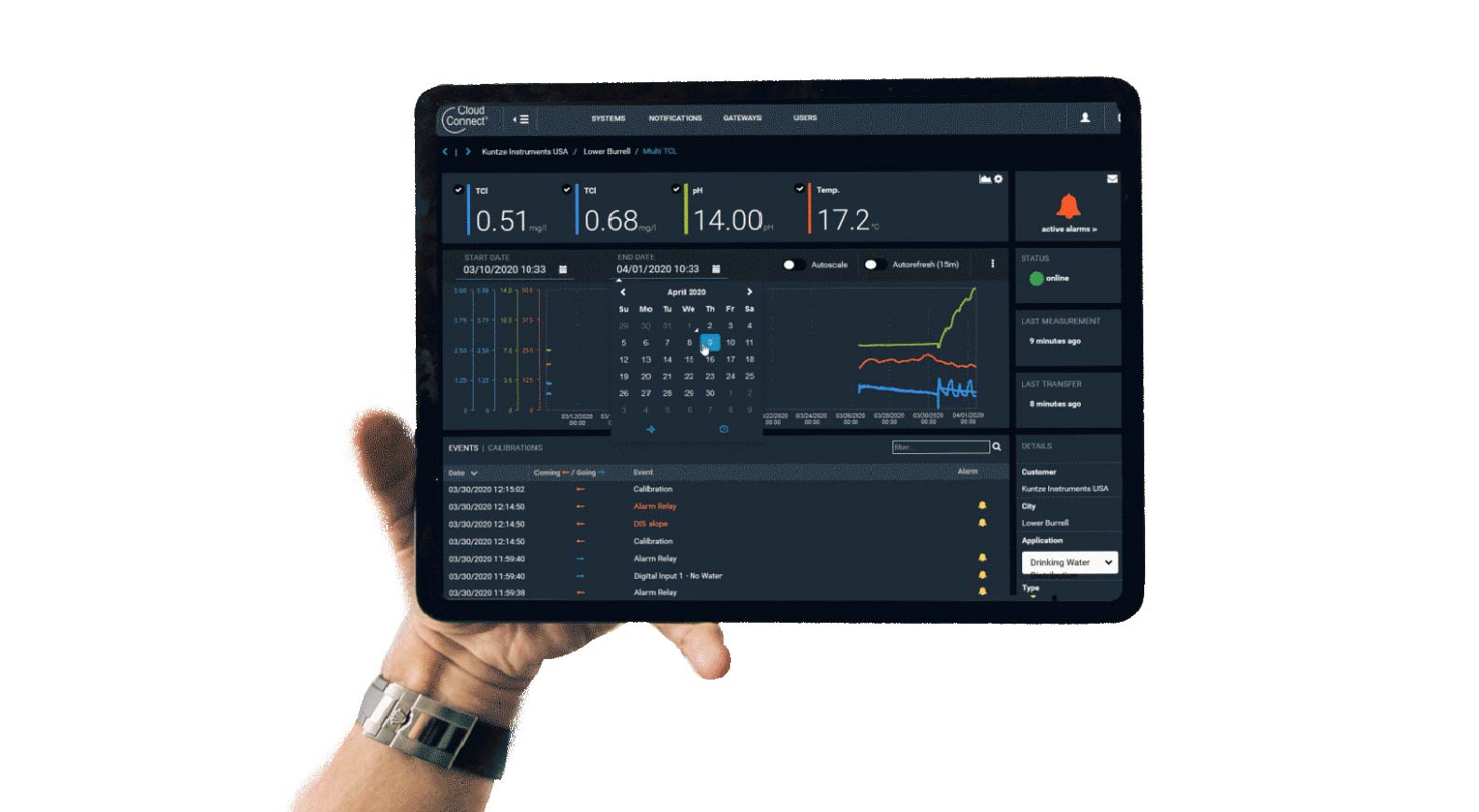
The starting point for AI development is an AI-suitable data foundation. In a production context, this data foundation is typically created through one or more monitoring systems that capture system states and operational data in real time and make the data accessible for further analysis.
Stage 1: AI Detection
In the generated data foundation, a detection AI can search for deviations in cycle time patterns and group similar patterns across different clusters. Subsequently, process experts can assign meaningful names to these groups, i.e., categorize them. The result can already be used in an alert system for system operators that activates whenever the current cycle time pattern falls into an undesired group or cannot be assigned to any group.
Stage 2: AI Diagnosis
In the next step, a diagnostic AI uncovers causal chains between problems in the production line, detected cycle time patterns, and underlying system settings. The key focus is on understanding why the line is losing synchronization or coming to a standstill. If cycle time disruptions can also cause quality issues in the workpiece, workpiece quality should ideally be included in the diagnosis, i.e., incorporated into the data foundation.
Here, AI brings a special capability to the table. It learns the rule set of the underlying causal chains without ever being given an explicit rule, purely on a data basis.
The way an AI stores and outputs implicitly learned rules is often incomprehensible to humans, since simple "if X, then Y" relationships rarely result. AI diagnoses can thus be quite unsatisfying for humans. aiXbrain therefore works intensively on human-centered AI that provides, among other things, explanations comprehensible to humans.
Stage 3: AI Prediction
A predictive AI reverses the rules learned in AI diagnosis temporally and draws conclusions from the observed cycle time patterns and underlying system settings about future system synchronization. Through a forward-looking alert system, operators can be informed early by the predictive AI that the system will run into problems if cycle time deviations are not corrected.
And at the same time, insights from the diagnostic AI can help operators quickly take effective countermeasures. In the end, critical conditions of the line can be prevented.
Stage 4: AI Control
In the final expansion stage, a control AI presents a configuration proposal to the system operator in the event of a warning from the predictive AI to get the line back in sync and prevent emerging problems. If the control AI has observed enough different causal chains, i.e., setting-cycle time-system state pairs, it can independently draw conclusions about which adjustment of settings leads to which cycle time patterns. With this learned knowledge, the control AI can guide a correction into a non-critical operating range, saving costs, time, and effort.
Value of AI for Cycle Time Optimization
Manual analysis and correction of cycle time fluctuations in linked production lines involves high effort. Identifying underlying root causes often does not work, and without comprehensive understanding of causal chains, proactive error prevention is not possible. AI in its various forms of application brings light to corners where humans currently cannot see and thus enables sustainable improvements in process management.
For use in daily operations, AI can be provided in the form of one or more AI assistants. This gives system operators a powerful tool that enables them to work collaboratively with AI to solve complex problems on the line. aiXbrain places high value on establishing such hybrid intelligence systems in which humans and AI collaborate and complement each other.
If you are interested in further value-creating AI use cases in manufacturing, we recommend the other articles in our mini-series: